Working Dog Encyclopedia

Conservation/Environment
detection dogs, discrimination dogs, and more
Photo credit: Amira Elsawi (35 mm film taken on my Minolta x-700 and developed by Treehouse on Oʻahu).
Wildlife Crime
Target Odor-Wildlife Contraband in Sealed Shipping Containers: A Research Partnership between the Conservation Canines at the University of Washington, led by Dr. Samuel Wasser, and the Department of Homeland Security Center of Excellence in Cross Border Threat Screening and Security, managed by Texas A&M, recently discovered that, despite a lack of air flow, dogs are capable of effectively detecting illegal big cat pelts smuggled through sealed shipping containers.
Environmental Justice
Target Odor-American Mink and River Otter Scat: Working Dogs for Conservation (WD4C), alongside Indigenous Voices and Amskapi Pikuni communities, has launched its first environmental justice program. By training dogs in this program to detect sentinel species scat, WD4C and Indigenous Voices have developed an efficient means of collecting data concerning contamination from heavy metals, pharmaceuticals, and endocrine disruptors in areas used for traditional food, medicine, and fiber gathering by Amskapi Pikuni communities. Click here to learn more about how these dogs are advancing environmental justice by supporting critical components of cultural integrity and identity such as food security and food sovereignty.
Hazardous Waste/Contaminant Detection Dogs:
Target Odor-Polychlorinated Biphenyls (PCBs): In 2016, Seattle Public Utilities (SPU) and the Conservation Canines program at the University of Washington launched a pilot study concerning the use of dogs to detect PCBs. Following a successful pilot study, Conservation Canines, FieldLab, and SPU have conducted various surveys, particularly along the Lower Duwamish Waterway.
Disaster Response
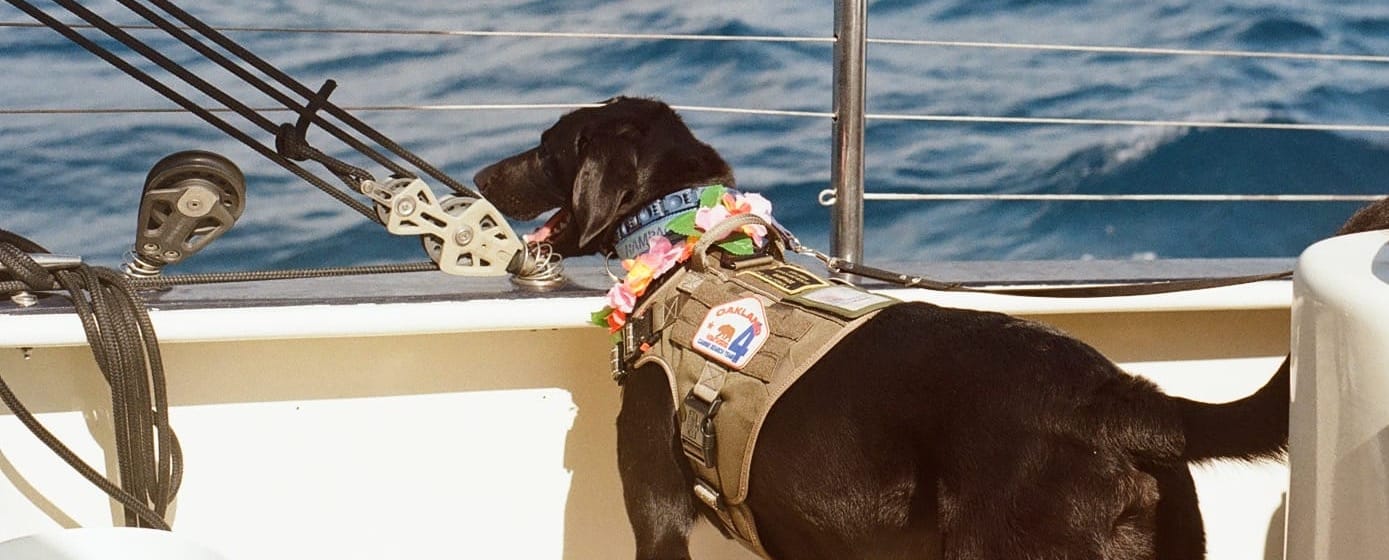
Photo credit: Amira Elsawi (35 mm film taken on my Minolta x-700 and developed by Treehouse on Oʻahu).